| Programme of EventsMembershipPublicationsEditorial BoardOfficers | Library | Medieval Graffiti Survey |
|
|
Hampshire Field Club & Archaeological Society |
| Registered Charity number 243773 | HomepageArchaeologyHistoric Buildings Hampshire Papers LandscapeLocal History |
 |
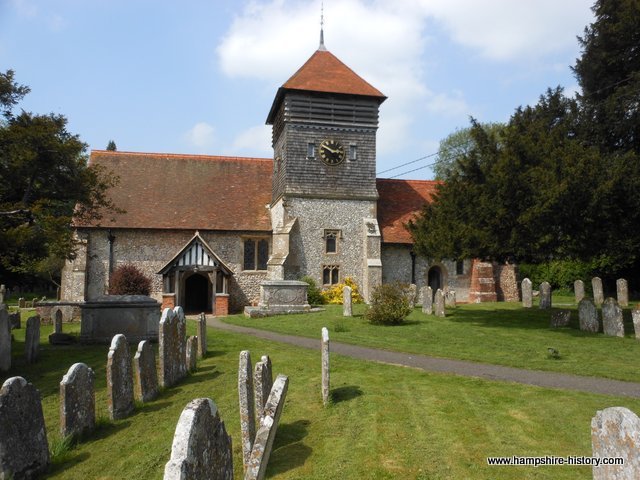
St Peter, RopleyPostcode: SO24 0DS Grid Ref: SU646320 CHR No: 641022 (Each image below is linked to a larger version; to see the larger version it may be necessary to allow 'pop-ups'.)
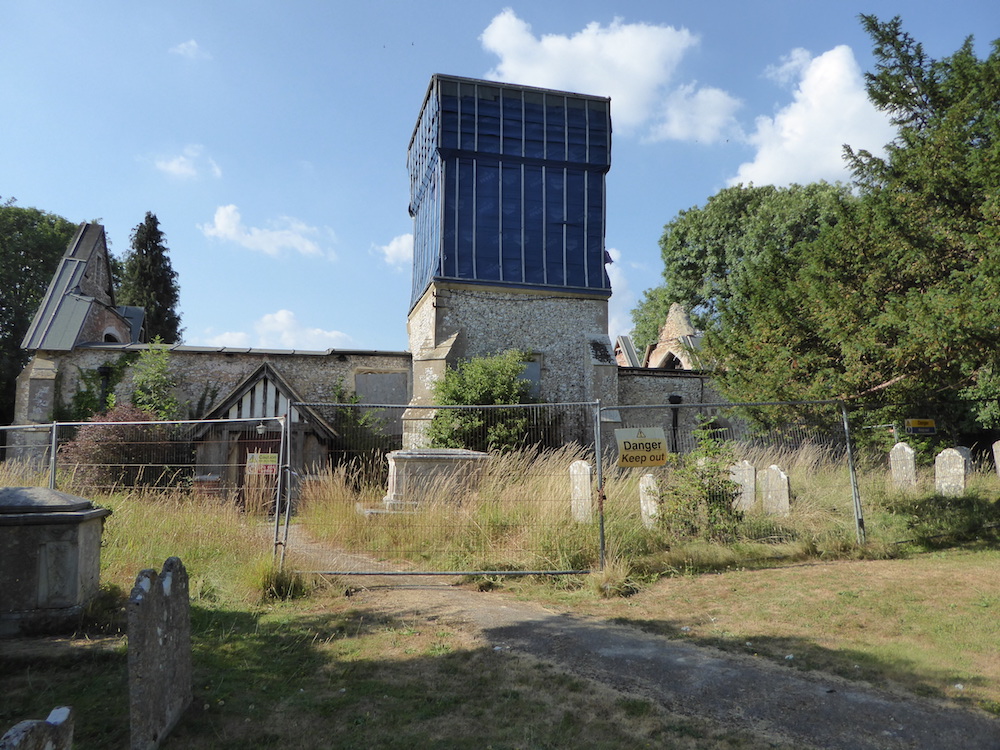
Sadly, this church was almost completely gutted by a fire in 2014 (Photo 2 below); it was reopened on August 26, 2022. The parish council kindly allowed access on site in 2018, providing a rare opportunity to see a church structure stripped to its bones. While some of the fabric has been totally destroyed, some areas have survived, and a number of these hold significant amounts of historical graffiti. This graffiti represents the beliefs and actions of people who visited the church in the past. It provides another insight into the building’s history and is a valuable resource for historians and researchers. The historical significance of some of Ropley’s graffiti is described in Helen Banham’s report at the end of this document
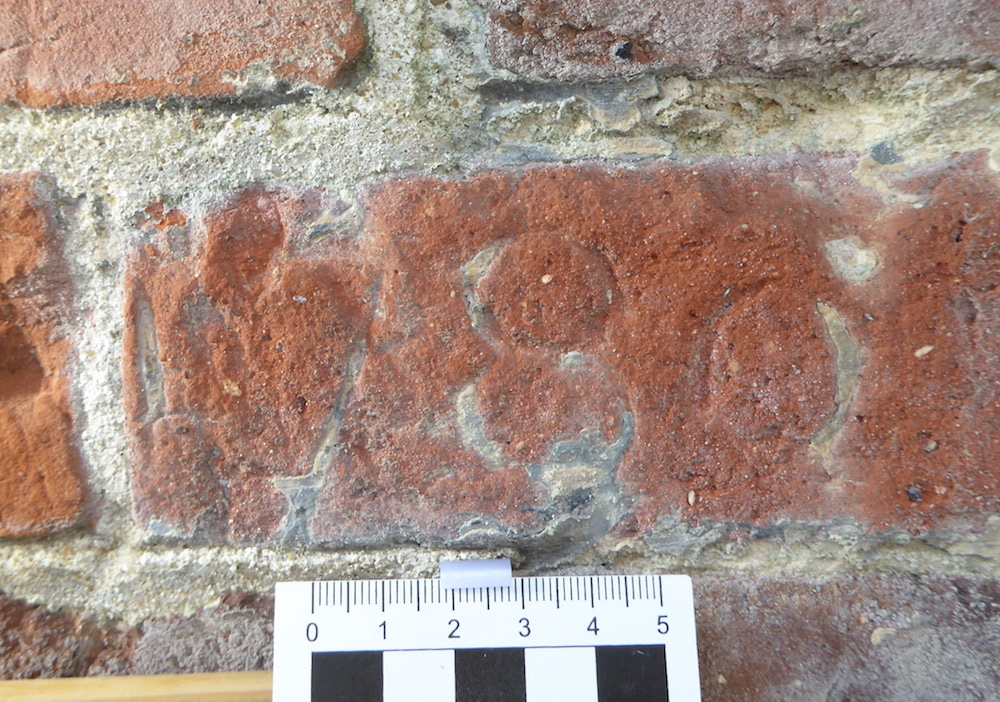
The GraffitiThe exteriorDense undergrowth made access to most areas of the exterior impossible. However, we did examine the brick south porch. We found one brick inscribed 1780 (Photo 3), and others with initials and more illegible marks.
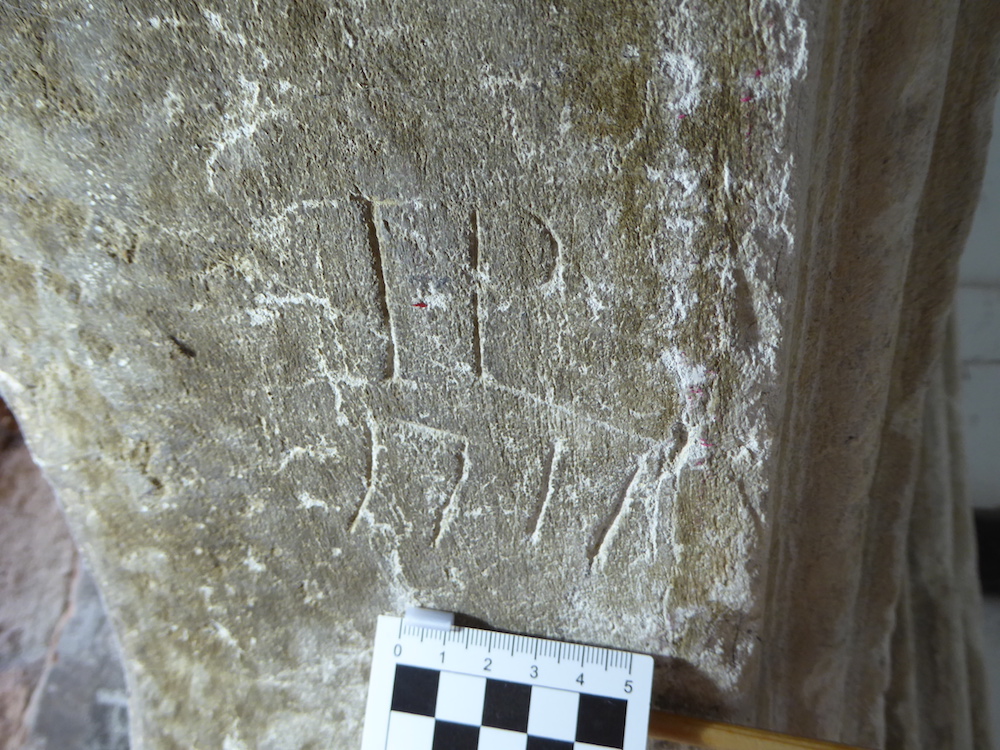
The interiorThe south porch leads to a south doorway under a fine Tudor arch, with a striking Green Man in the east spandrel. The doorway contains a large amount of graffiti, including many initials and dates. The date 1711 is repeated several times and is accompanied by different sets of initials (Photo 4).
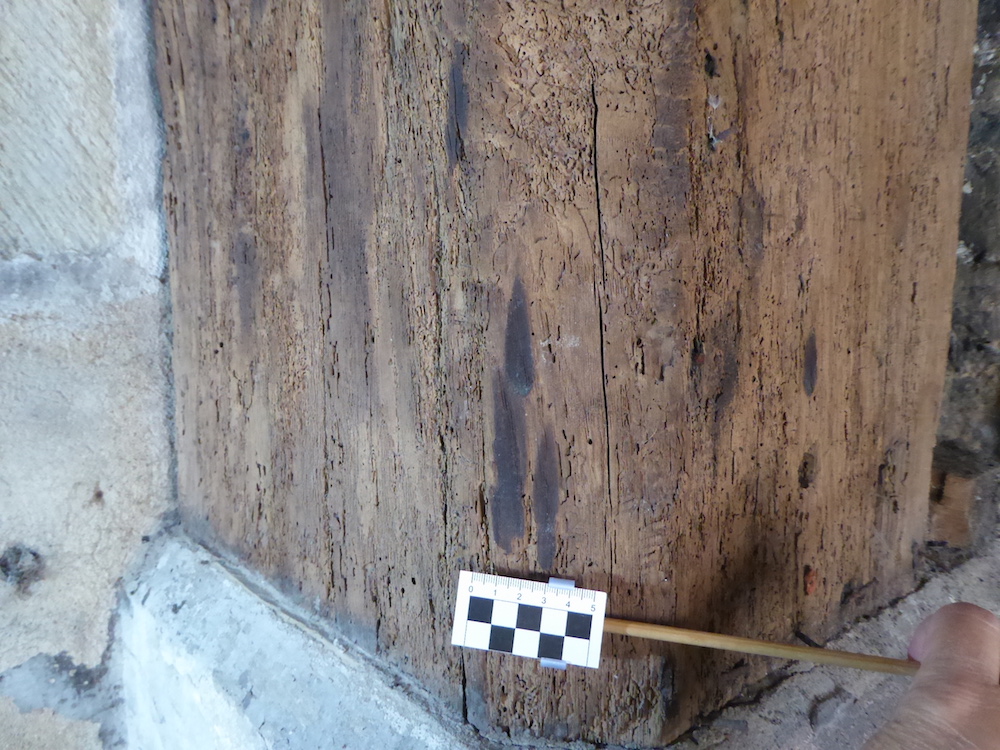
The large, well-seasoned timbers of the tower survived the fire. On one of the uprights are tear-shaped burn marks (Photo 5) which go deep into the surface of the wood. These marks used to be thought to be accidental burns made by candles or tapers, but recent research and experimentation reveal that such marks were made deliberately, probably to serve an apotropaic or ritual protection function, against fire. If this was the case, sadly they had limited effect.
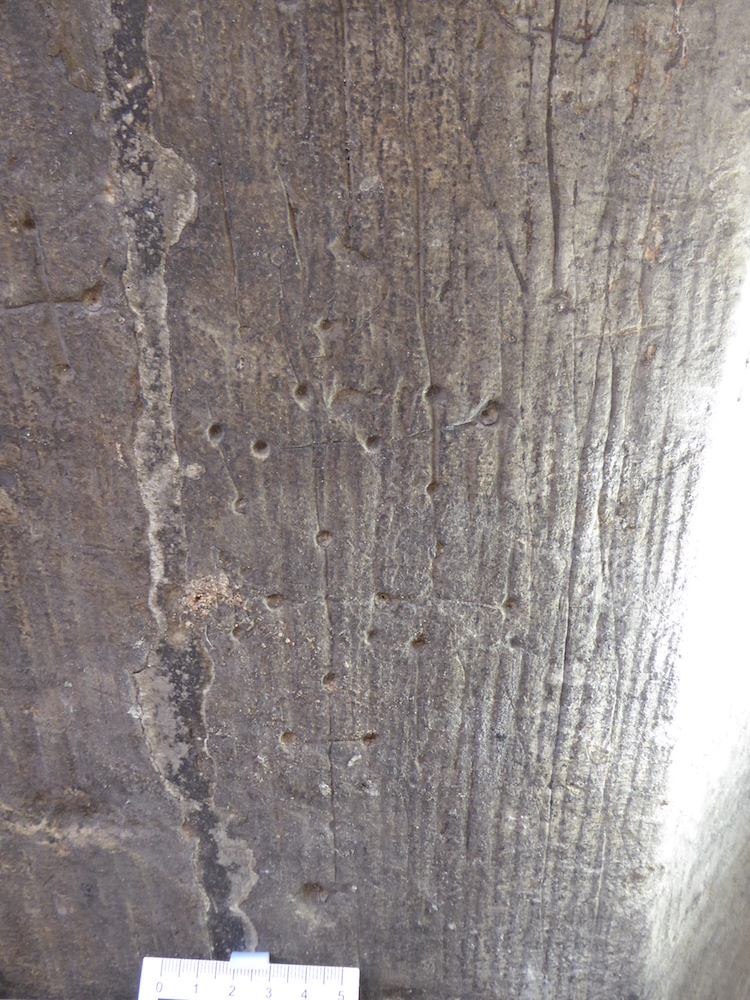
The most striking graffiti, in terms of quantity and quality, can be found on an octagonal pillar in the south arcade of the chancel...There are an impressive number of crosses on the pillar, with a concentration on the east side. They are carefully made, the terminals ending in circular dots. (Photo 6) The phenomenon of such groups of crosses is often attributed to visiting pilgrims, on their way to holy shrines, but it is just as likely that these crosses represent the prayers of local parishioners, who left their mark on entering the church.
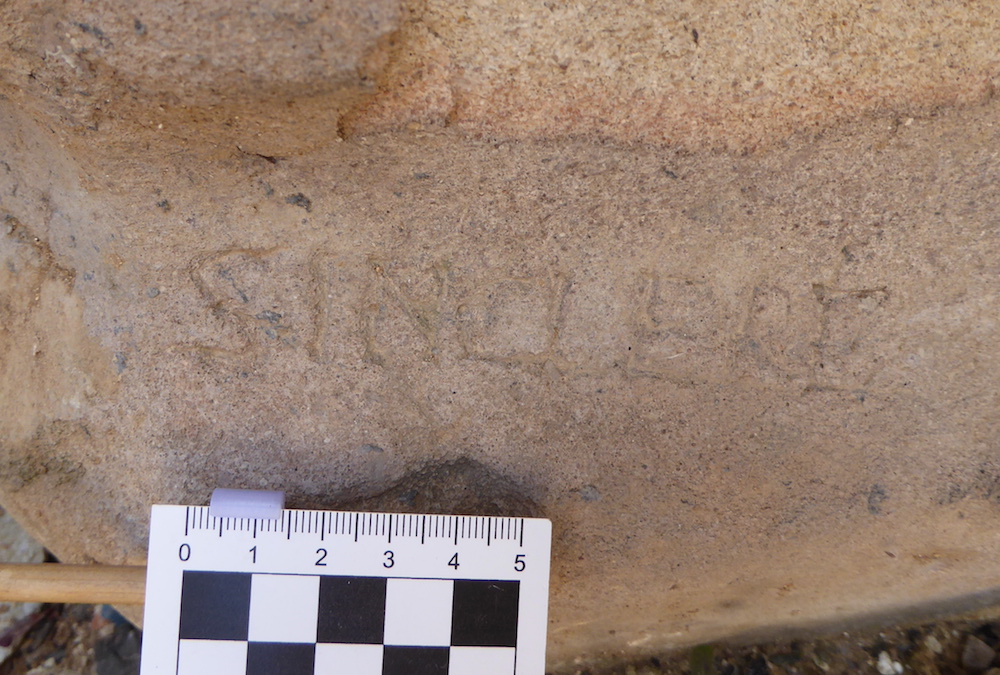
There are a number of VV marks, thought to be dedications to the Virgin Mary. There is a group of small, compass-drawn circles, on one face. Such marks are also thought to be apotropaic, protecting a building from evil spirits and the Devil, and are common finds in churches and secular buildings all over the country. There are also many initials, some enclosed within boxes, and 17th and 18th century dates (including 1711 again). The FontThe original font survives in a very sorry state, its top covered with the molten remains of its lead lining. However, on the plinth there survive some carefully scratched names and initials. (Photo 7) No dates are present but it may well be possible to identify these people through further research.
Acknowledgements DisclaimerThis document has been prepared for the titled project or named part hereof and should not be relied upon or used for any other project or assessment without the permission of the Hampshire Medieval Graffiti Project or the church. The full report is available as a PDF download (2.9 mb). The report also contains an account of the historical significance of some of Ropley’s graffiti Helen Banham. Karen Wardley, Co-ordinator, HMGP |
|
| Contact Any questions about the web site? Then email Webmaster |
||