| Programme of EventsMembershipPublicationsEditorial BoardOfficers | Library |
|
|
Hampshire Field Club & Archaeological Society |
| Registered Charity number 243773 | HomepageArchaeologyHistoric Buildings LandscapeLocal History |
 |
Newsletter 44 - Autumn 2005 Christopher Currie BA (Hons), MPhil, MIFM, MIFA (888) 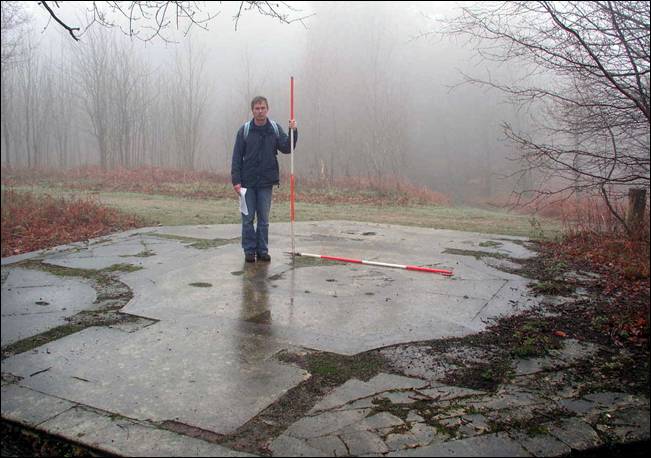
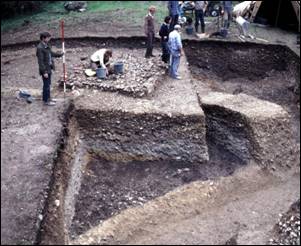
Most members of the Hampshire Field Club and Archaeological Society will be aware that Christopher Currie died suddenly at the end of May whilst carrying out an archaeological survey for the National Trust on the Isle of Wight. Chris had been involved with the Field Club since the 1980s and had edited the Newsletter for the Landscape Section since 1996. Many members will have memories of Chris’s lectures and field trips for the Field Club, which never failed to inform and amuse in equal measure. He was also a regular contributor to the Proceedings, publishing articles on a wide range of archaeological and historical subject matter relating to Hampshire. Chris loved the county in which he had lived all of his life, and his death deprives the archaeological community of one of the most knowledgable and passionate exponents of archaeological and historical studies in Hampshire. Chris’s archaeological career began in the early 1980s, and he spent several years during the decade working in Wiltshire running a Manpower Services Commission archaeology unit and also as an archaeological research officer in the London Borough of Harrow. This led to his taking an M.Phil at the University of London studying the archaeology of medieval fishponds. In 1989 he was appointed as a Leverhulme Research Fellow to test the application of archaeological methods to practical fieldwork on historic gardens, based at Castle Bromwich Hall, West Midlands. This led to the founding of the Gardens Archaeology Project, which amongst its projects carried out an important nine-year series of research excavations at Dartington Hall, Devon, a long term project excavating and surveying the landscaped gardens at Bushy Park, Greater London, and a series of excavations at Leigh Park in Hampshire. Chris was a passionate believer in raising archaeological standards, and was a supporter of the IFA, its Standards, and the Registered Archaeological Organisations scheme. From 1992 he was Principal of CKC Archaeology, and never failed to append the fact that the consultancy was IFA RAO no. 1! CKC Archaeology has been one of the most active archaeological units in Hampshire during the past thirteen years, ensuring that the archaeology of the county is recorded to the highest professional standards ahead of commercial development. This work was carried out alongside an ongoing series of research projects in Hampshire and the rest of the UK, resulting in a very long list of publications and reports. Chris was a multi-faceted archaeologist, with an amazing range of knowledge on just about all periods of British archaeology – he published almost eighty articles in county and national journals and book chapters, covering an array of periods and sites from many different geographical locations. His historical training and meticulous approach led to definitive papers on subjects as diverse as the introduction of the carp to England, ponds as garden features, horticultural ceramics, Saxon charter boundaries, post-medieval environmental archaeology, and woodland management in the 18th century. He was always committed to publishing the results of his work, and his legacy of publications are testament to his assiduousness in ensuring research was carried through to dissemination at a time when many contractors were drawing back from publishing more than a brief outline referring to a ‘grey literature’ report. Chris believed that archaeology belonged to everybody, and always tried to provide opportunities for schoolchildren, students and volunteers to participate in his projects. Although not by nature a 'committee man', he served for long periods on the committees of the Society for Landscape Studies and Hampshire Field Club. Chris was never afraid to court controversy in his interpretations and ideas, and his input into many fields of British archaeology will be sorely missed by fellow professionals and amateurs within the archaeological community. Chris’s CBA Handbook Garden Archaeology is in the final stages of publication and will be available in August or September. This draws together much of his work on the subject and it is a great tragedy that he will not see the publication in its final form. But the handbook will stand as a lasting testament to his innovative archaeological outlook, and will hopefully inspire a new generation of archaeologists to investigate the archaeology of British gardens. Chris was 52 and leaves a wife, Trudie, and three children, Jonathan (17), Aaron (15) and Eloise (11). Neil Rushton & Martin Locock June 2005
Thanks Chris, for all your help, advice and articles; and your unique contribution to our understanding of the history and archaeology of Hampshire. |
|||