| Programme of EventsMembershipPublicationsEditorial BoardOfficers | Library | Medieval Graffiti Survey |
|
|
Hampshire Field Club & Archaeological Society |
| Registered Charity number 243773 | HomepageArchaeologyHistoric Buildings Hampshire Papers LandscapeLocal History |
 |
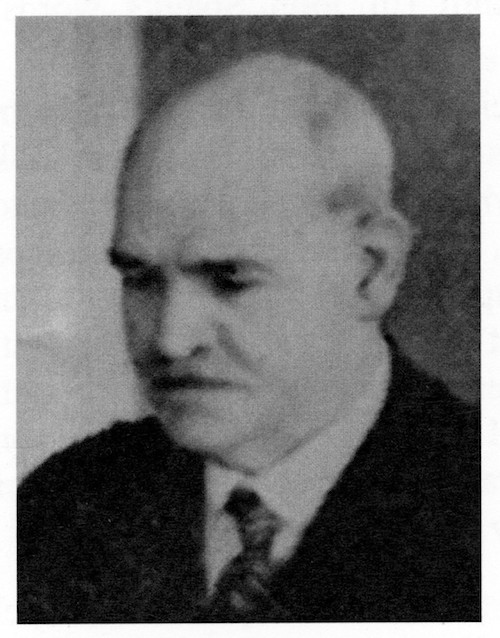
Celebrating Hampshire HistoriansParsons, Edmund1 September 1872 – 13 September 1951Edmund Parsons was, for many years, joint proprietor of Parsons & Hart, a Department Store which took up considerable space (Waterloo House) on the west side of Andover High Street. The business had been started by his grandfather, William Parsons, in 1842. William Parsons met with an untimely end in November 1858, when he was cruelly murdered in a field outside the town. His grandson, although a diligent historian, never mentioned the event in his writings. David Borrett (2005) has put together all the available evidence about this dark episode, unresolved at the time, to produce an intriguing account of mid-Victorian Andover. Parsons was schooled at Andover Grammar School and Brighton & Hove Grammar School before a spell as an ‘apprentice’ in Uxbridge in 1891. Records show that he married Kathleen Craddock in Faringdon, Berkshire, in September 1900 and a year later he was running a store in his own right in Brixton. The 1911 census places the couple in Torquay, at a family home, but this is where his father died, in that year, and presumably Edmund then took a leading role in the Andover business. The Parsons moved into Tyhurst, Winchester Road, Andover, and Edmund secured a green space around their property by creating and owning the Andover golf course, which is still there today. Edmund Parsons was also ‘one of the best chess players in the south of England’. By this time Arthur Bennett was writing articles on Andover history and he and Parsons collaborated in producing an extremely thorough (they called it ‘discursive’) History of Andover Grammar School, published by Parsons in 1920. In their introduction the authors pay tribute to Canon Collier & Revd Clutterbuck ‘whose writings and lectures first led us to take up the sport (for sport it is) of antiquarian research’. Parsons seems to have been a medievalist at heart. His work on The Manor of Andover was published in 1924; Andover Charters and The Gild of Merchants followed in 1925 and Court Rolls of The Hundred of Andover in 1934. The Ordination Deed of the Chantry was explored in 1935 and an article on the Andover Woollen Industry was reprinted in the Field Club Proceedings in 1946. Parsons was Honorary Curator of Andover Museum, a Justice of the Peace, a member of the Andover Literary and Debating Society and a prominent voice in the town. It was his suggestion that the provision of a new hospital would be a fitting memorial (along with a Cenotaph) for those who lost their lives in the Great War (WW1). The money was raised by public subscription and the Andover War Memorial Hospital opened in 1926. Edmund Parsons was made a Freeman of the Borough in recognition of his fundraising efforts. Sources
Portrait
Ex Lookback at Andover Contribution to county’s historyParson’s obituary states that he had ‘…cause to be regarded as the greatest authority’ on the history of Andover, an accolade he would no doubt have bestowed on Arthur Bennett. Relevant published works
Critical CommentsOther CommentsContributorDave Allen, Tony Raper - May 2024 Key WordsAndover Any queries or further suggestions for this part of the list should be addressed to celebrating@hantsfieldclub.org.uk.
| |
| Contact Any questions about the web site? Then email Webmaster |
||