| Programme of EventsMembershipPublicationsEditorial BoardOfficers | Library | Medieval Graffiti Survey |
|
|
Hampshire Field Club & Archaeological Society |
| Registered Charity number 243773 | HomepageArchaeologyHistoric Buildings Hampshire Papers LandscapeLocal History |
 |
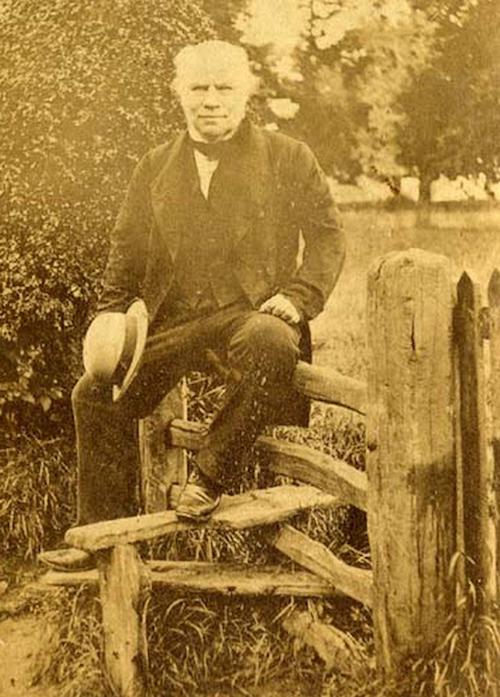
Celebrating Hampshire HistoriansMoody, Henry (Harry)1805 - 5 July 1871He came from a family of Winchester brewers and as the eldest son had to the chance to enter the business, but did not take to it and handed the opening over to his brother William (who played a part in saving the city’s muniments by keeping them in a malthouse, HRO, 21M85W/10/1921). In an astonishing act of bravura after the Municipal Corporation Act of 1835, Henry placed an advertisement in the Hampshire Chronicle offering his services as the Borough Treasurer. As Barbara Carpenter Turner put it, he ‘was not successful and turned to local history’! In 1840 he published an account of St Cross Hospital and in the same year a 46-page directory of Winchester, with an historical and descriptive account of the city. It was the first of many works he was to write on a variety of historical subjects. Ever the opportunist, in September 1845 he ‘worked’ the meeting in Winchester of the [Royal] Archaeological Institute of Great Britain & Ireland by contributing items to a temporary museum set up in the Deanery. He also distributed to the hundreds of delegates, many of them distinguished scholars, a copy of a specially printed list of Hampshire parishes, tythings and manors in the Domesday Book he had compiled. The following year he published Antiquarian and Topographical Sketches of Hampshire, Winchester, based on articles in the Hampshire Advertiser, to which he contributed many pieces as Odd Stock Papers (Minns, PHFC, 6, Supplement, p. 44). He later wrote for the Southampton Times, established in 1860, where he was followed by his son Walter, who died in 1900. (Incidentally, the PHFC was first printed on this newspaper’s press.) His eldest son, Henry (1840-1921) was also a newspaper reporter, almost certainly for the Hampshire Chronicle (censuses 1871-1901; HRO, TOP343/3/456). Moody’s most prominent role was as curator of Winchester Museum, established in 1847 first in the former Hyde Abbey School and then in 1851 in the former house of the Governor of the Gaol in Jewry Street. Here it opened with a public library, the first to open anywhere in the country following the Public Library Act 1850. ‘It was in this building that Moody was to spend the rest of his life, arranging his displays, giving lectures, and writing the books and the articles that made him known all over England,’ according to Carpenter Turner. His end when it came in 1871 was sudden and out of character. It was discovered that he had sold off coins, items of armour and books without permission. He immediately resigned and within six weeks was dead. He left a widow and a daughter, Mary, who took over the museum, evermore claiming that ‘he had ruined himself by his studies and his devotion to local history’. Sources
Portrait
Contribution to county’s historyAn enthusiastic pioneer in the promotion of local history to a wide audience in the county, by means of writing, lecturing and running a museum. Relevant published works
Critical CommentsHe achieved a great deal in spreading an interest in local history, especially as a man with little formal education, but ‘his habit of combining complete fact and fiction makes some of his public work dangerous reading’ (Carpenter Turner) Other CommentsContributorBarry Shurlock, 30 January 2024 Key WordsWinchester Museum, Winchester Public Library, Hampshire newspapers Any queries or further suggestions for this part of the list should be addressed to celebrating@hantsfieldclub.org.uk.
| |
| Contact Any questions about the web site? Then email Webmaster |
||