| Programme of EventsMembershipPublicationsEditorial BoardOfficers | Library | Medieval Graffiti Survey |
|
|
Hampshire Field Club & Archaeological Society |
| Registered Charity number 243773 | HomepageArchaeologyHistoric Buildings Hampshire Papers LandscapeLocal History |
 |
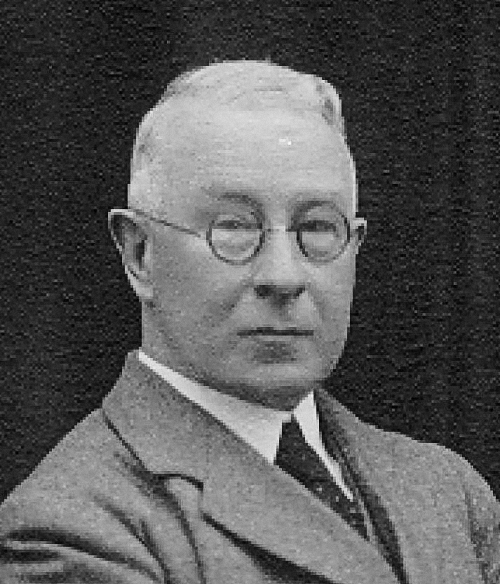
Celebrating Hampshire HistoriansHearnshaw, Fossey John Cobb M.A., LL.M.31.07.1869 – 10.03.1946Born in Birmingham, Hearnshaw went to Walsall and Manchester Grammar Schools before leaving school at 14 years old to be apprenticed to a pharmaceutical chemist for five years. He studied part-time through the Correspondence College for examinations at London University (BA) before studying at Peterhouse, Cambridge, (History Scholar, MA and LL.M.) 1900, and Trinity College, Dublin (LLD), Cambridge (LittD) in 1934. School master and private tutor for 3 years before becoming the lecturer in English History at the Hartley Institution, Southampton, rising to Professor after it became a University College in 1902, 1900-1910; Professor of History at Newcastle University, 1910-1912; Professor of Medieval History at King's College London, 1913-1934; and Fellow of King's College London, 1926. Also held the posts of Honorary Secretary of the Royal Historical Society, 1931-1934 and President of the Historical Association, 1936-1938. Sources
Portrait
Contribution to county’s historyHearnshaw was only based in Southampton for ten years (1900-1910) but in that time, he made a major contribution to the understanding and popular appreciation of the town’s history. He was appointed as the only lecturer in English History by the Hartley Institution, which became a University College in 1902. As well as being required to lecture at least 20 hours a week, he found time to set up exhibitions of ‘relics’ from ‘old Southampton’, give local history talks to a wide range of audiences and publish the most scholarly works of his career, which focused on the Court Leet records for Southampton. Hearnshaw was instrumental in setting up the Southampton Record Society becoming General Editor of its publications (1905-1910), as well as researching and writing the first five volumes, four with his wife Dorothea Mabel (Dora) nee Spencer, who was also a Cambridge historian. From 1904 to 1910, he was Honorary Editor of the Papers and Proceedings of the Hampshire Field Club and Archaeological Society, working in partnership with the Reverend Minns for the first three years. In addition, he contributed papers on Southampton to this and other journals. He was also a member of the Southampton Literary and Philosophical Society. From 1909, Hearnshaw was one of the driving forces behind an international campaign to build a memorial to the ‘Pilgrim Fathers’ in Southampton. The memorial was finally unveiled in 1913 on the Western Esplanade where it still stands today. Relevant published works
Critical CommentsHearnshaw’s imperialist and conservative views need to be considered when understanding the meaning he attached to the story of the Mayflower and the Pilgrim Fathers and the way in which this narrative has been absorbed into popular memory. Other CommentsHearnshaw was a prolific writer and was actively involved with several Southampton and Hampshire organisations at the same time as being the only member of staff teaching history at the Hartley Institution/University College. In the preface to one of his volumes that runs to 406 pages he says “[This volume] has been written in the brief intervals of leisure which alone the multifarious duties of a teacher in a growing University College leave. The great bulk of it, in fact, has had to be penned in periods stolen from sleep before the breakfast hour of crowded days.” (Hearnshaw, 1908b) ContributorJo Bailey 21 February 2021 Key WordsSouthampton, Hartley College, University College, Southampton Record Society, the Pilgrim Fathers Any queries or further suggestions for this part of the list should be addressed to celebrating@hantsfieldclub.org.uk.
Back to Historians G-H from Gallup, Peter to Hudson, William Henry | |
| Contact Any questions about the web site? Then email Webmaster |
||