| Programme of EventsMembershipPublicationsEditorial BoardOfficers | Library | Medieval Graffiti Survey |
|
|
Hampshire Field Club & Archaeological Society |
| Registered Charity number 243773 | HomepageArchaeologyHistoric Buildings Hampshire Papers LandscapeLocal History |
 |
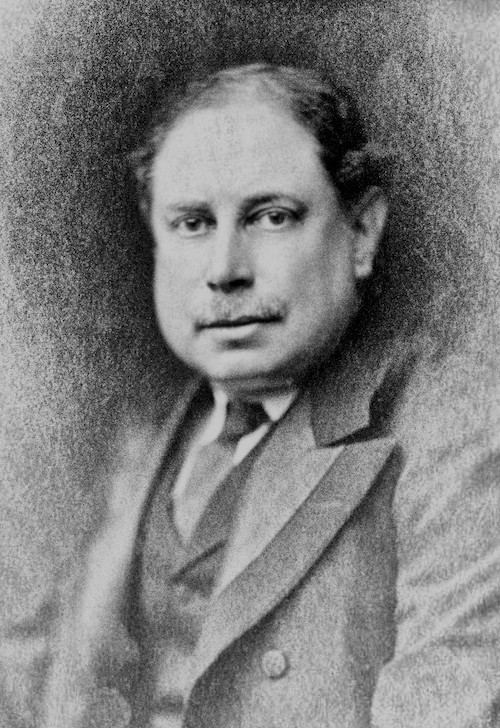
Celebrating Hampshire HistoriansHaverfield, Francis John8 November 1860 – 1 October 1919Francis Haverfield was born at Shipston-on-Stour, Warwickshire to Rev William Haverfield and Emily his wife (née Mackarness). His mother died when he was two and his father fell into a ‘hopeless and prolonged decline’. Deprived of a normal home life, Francis developed an abruptness of manner which was apparently with him for the rest of his life. Haverfield entered Winchester College in 1873 and six years later went up to New College, Oxford, graduating in 1883 with a ‘disappointing’ degree in Classics and Greats. From 1884 to 1892, he taught at Lancing College and it was during this period that he developed an interest in Roman Britain and honed his skills in reading Roman epigraphy. On a visit to Berlin, he made the acquaintance of and was advised by Theodor Mommsen (Wikipedia entry), widely regarded as one of the greatest classicists of the 19th century. Returning to Oxford in 1893, he won the Conington Prize and was appointed Fellow and Librarian of Christ Church College. In 1907 he moved to Brasenose having been made Camden Professor of Ancient History. Haverfield was a pioneer in the field of Romano-British archaeology, the first to undertake a scientific study of the period and to address the Romanisation of the Empire. He also initiated, in 1914, a monumental project to publish the entire corpus of inscriptions from Britain for the Roman period, a task subsequently brought to fruition by R G Collingwood, R P Wright and R S O Tomlin. Among Haverfield’s works were the authoritative chapters on the Roman period which he contributed to the Victoria County Histories. Hampshire was no exception. The wide-ranging survey occupies 85 pages of Vol.1 and is a masterly summary of the state of knowledge as it was at that time. Haverfield bequeathed his papers and impressive library to Oxford University and these are now housed in the Sackler Library at the Ashmolean. The archive consists of correspondence, prints, site plans, and drawings of mosaics etc brought together on a county-by-county basis. The Hampshire collection, consisting of 65 envelopes of material, is among the largest. In 1907, Haverfield married Winifred Breakwell, a maths tutor at St Hugh’s and leading light in the Oxford women’s suffrage movement. Their house, Winshields, in Headington, was a regular venue for suffrage meetings. Haverfield also played an important part in creating both the Society for the Promotion of Roman Studies and the British School at Rome cultivating many contacts abroad. The outbreak of war in 1914 deprived him of many of these avenues. He was particularly badly affected by the death of his favourite student, G L Cheesman, who was killed at Gallipoli and suffered a breakdown from which he apparently never fully recovered. SourcesFreeman P W M (2007) The Best Training Ground for Archaeologists: Francis Haverfield and the Invention of Romano-British Archaeology.Wikipedia ONDB Portrait
Contribution to county’s historyA ground-breaking and comprehensive survey of the known Roman remains in Hampshire and the Isle of Wight, at the end of the 19th century.. Relevant published works
Critical CommentsOther CommentsContributorDave Allen, October 2023 Key Words VCH, Roman Hampshire, OxfordStockbridge, Westfield College (University of London), medieval bishops' registers, crusadesAny queries or further suggestions for this part of the list should be addressed to celebrating@hantsfieldclub.org.uk.
Back to Historians G-H from Gallup, Peter to Hudson, William Henry | |
| Contact Any questions about the web site? Then email Webmaster |
||