| Programme of EventsMembershipPublicationsEditorial BoardOfficers | Library | Medieval Graffiti Survey |
|
|
Hampshire Field Club & Archaeological Society |
| Registered Charity number 243773 | HomepageArchaeologyHistoric Buildings Hampshire Papers LandscapeLocal History |
 |
Celebrating Hampshire HistoriansGilpin, William4 June 1724 – 5 April 1804William Gilpin was a Church of England cleric, schoolmaster, artist and author. He is perhaps best known as a travel writer, and one who originated the idea of the ‘picturesque’. Gilpin was born in Cumberland, son of Captain John Bernard Gilpin, soldier and amateur artist. From an early age he was an enthusiastic sketcher, painter and collector of prints. His brother, Sawrey, became a professional artist, but William opted for the church, graduating, in 1748, from Queen’s College, Oxford. Following a period as a curate, Gilpin became a schoolmaster and from 1755 to 1777 he was headmaster at Cheam School. He was an enlightened educationalist, preferring fines to corporal punishment, and trying to instil ‘uprightness and utility’ among his pupils. Gilpin’s consideration of the ‘picturesque’ began while he was at Oxford, with an anonymous treatise upon the gardens at Stowe in Buckinghamshire, but it was during his time as a schoolmaster that he travelled widely and developed his ‘principles of picturesque beauty’. In 1768 he published a popular Essay on Prints, soon followed by Observations…relative chiefly to Picturesque Beauty on such areas as the Lake District, Wye Valley and the West of England. In 1777, Gilpin and his wife Margaret moved to Boldre, in the New Forest and it was here that he wrote his five ‘Tours’, illuminating the different qualities of landscapes in Scotland, Wales and England. Unlike other contemporary travel writers, he included little in the way of history and few facts or anecdotes, concentrating more on the demands of texture and composition, even suggesting that the artist drastically modify the scene in order to produce the desired effect. Pursuit of the picturesque became something of a cult during Gilpin’s lifetime but presented an easy target for satirists such as Jane Austen, notably in Northanger Abbey and Pride and Prejudice. The most comprehensive assault, however, came in William Combe’s very successful poem, Tour of Dr Syntax in search of the picturesque (1809) with illustrations by Thomas Rowlandson. Although his approach was criticised by some, Gilpin published at just the right time to satisfy an expanding market in tourism in the 1780s and 90s. His works were ideal guides for the new generation of travellers, keen to discuss and reflect on what they were seeing. Gilpin’s most significant Hampshire volume is Remarks on Forest scenery…illustrated by scenes of the New Forest (1791) but he also produced works on moral and religious subjects, including biographies of important churchmen. Some of the profits from his writing were invested in good works in the parish, including the endowment of a school at Boldre. SourcesPortrait
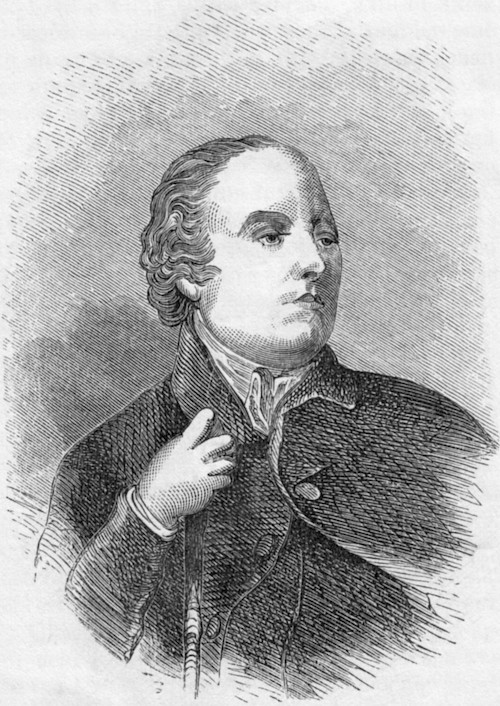
Engraving of Rev. William Gilpin. Source=''Harper's New Monthly Magazine'', No. 231, August 1869. Public domain. Contribution to county’s historyRelevant published works
Critical CommentsOther CommentsContributorDave Allen, September 2023 Key WordsNew Forest, Picturesque Any queries or further suggestions for this part of the list should be addressed to celebrating@hantsfieldclub.org.uk.
Back to Historians G-H from Gallup, Peter to Hudson, William Henry | |
| Contact Any questions about the web site? Then email Webmaster |
||